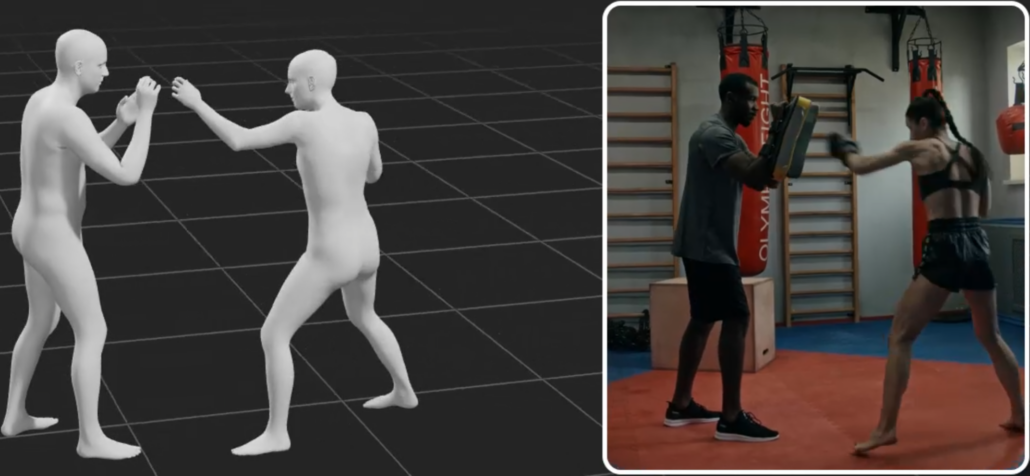
Epic Games recently acquired Meshcapade, a startup specializing in AI technologies for creating and animating hyper-realistic digital human models and animations from video recordings 

Epic Games recently acquired Meshcapade, a startup specializing in AI technologies for creating and animating hyper-realistic digital humans. Meshcapade, a spin-off from the Max Planck Institute for Intelligent Systems based in Tübingen, Germany, develops AI tools that generate precise 3D body models and animations from video recordings.

Meshcapade’s AI tools, built on the SMPL (Skinned Multi-Person Linear) parametric body model, primarily target and automate the body modeling and full-body motion capture stages in Epic’s MetaHuman pipeline, which currently relies on limited presets for bodies and less advanced video-based tracking for animation.

What Meshcapade Replaces in the current MetaHuman Pipeline:

  1. Preset/Manual Body Modeling: Replaces MetaHuman Creator’s ~50 preset bodies and external sculpting/rigging with AI-generated custom SMPL bodies from a single image, video clip, or scan. It extracts precise shape, pose, and clothing details automatically—no manual adjustments needed.
  2. Expensive Mocap Hardware: Replaces marker/suit-based systems (e.g., optical mocap studios) with markerless full-body capture from any camera (phone/webcam/pro). It tracks subtle motions like fingers/hands, camera movement, and multi-person scenes.
  3. Fragmented Body Animation: Complements/enhances MetaHuman Animator’s body solve with superior AI-driven full-body mocap, reducing retargeting hassles (pre-acquisition the plugin existed; now it will become native).

With the acquisition, Epic says it’s “looking forward to working together to advance digital human technologies for use across gaming, film and entertainment.”  I’m personally looking forward to a much simpler MetaHuman creation and animation pipeline for video game development and virtual production. development.


Claude Sonnet 4.6 Released on February 17, 2026

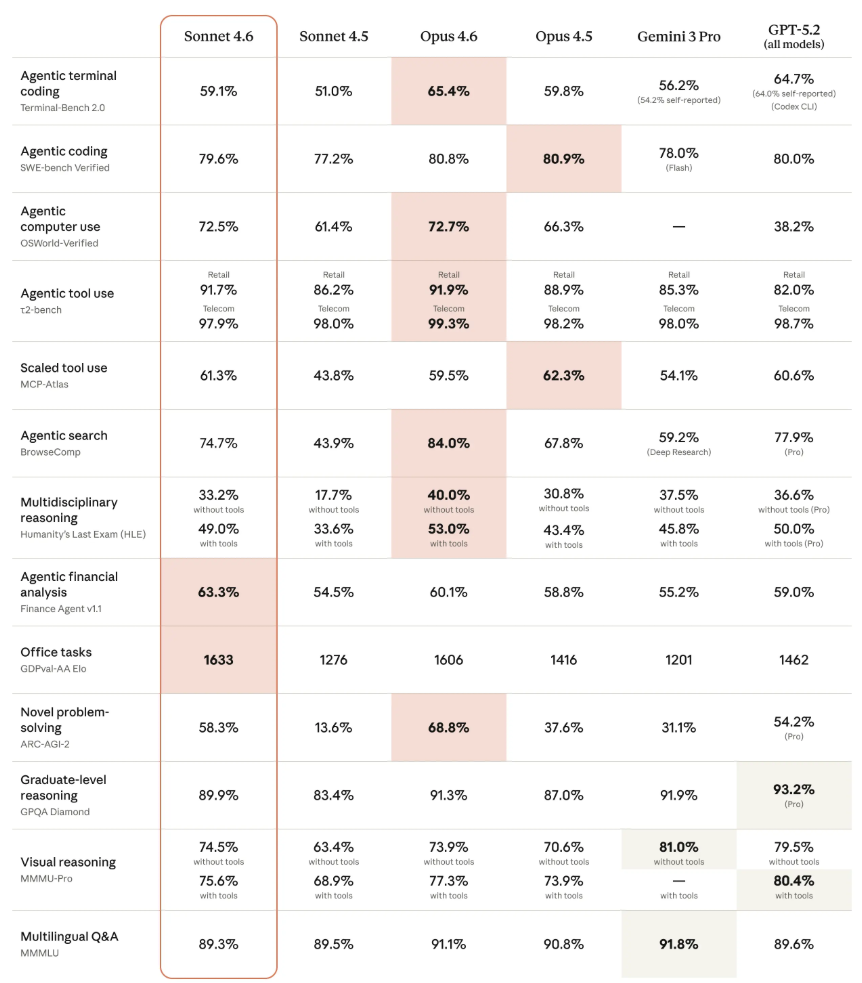
Anthropic released Claude Sonnet 4.6 on February 17, 2026 – almost 2 weeks after releasing their flagship Claude Opus 4.6 model.   Below are the latest benchmarks that Anthropic published in their Claude Sonnet 4.6 announcement:


You can read more about Anthropic Claude Sonnet 4.6 here.

AI Co-Development Just Got a Lot Easier with the Release of Claude Opus 4.6 and Open AI GPT 5.3 Codex on February 5, 2026

In this article, I will compare two specific domains: coding an agentic application (e.g., autonomous AI agents that use tools, plan multi-step workflows, interact with environments like terminals/browsers, debug in loops, and handle real-world software engineering) and game development (e.g., designing game logic, implementing mechanics in engines like Pygame/Unity-style code, handling physics/AI/pathfinding, procedural generation, balancing systems, and iterating on prototypes).

On February 5, 2026 Anthropic released Claude Opus 4.6 which is their current flagship, optimized for the most demanding, long-horizon, and complex tasks.  On the very same day, OpenAI released GPT-5.3 Codex (the dedicated agentic coding line). GPT-5.3 Codex is OpenAI’s current flagship for advanced coding and agentic workflows.

Key Specs Comparison:

Context Window: Claude Sonnet 4.5: 200K tokens Claude Opus 4.6: 200K standard / 1M tokens (beta, with much higher reliability) GPT-5.3-Codex: Not explicitly stated in releases (likely 200K–512K range, consistent with GPT-5 family; strong on long-horizon without 1M claims yet)

Pricing (API, per million tokens) Sonnet 4.5: $3 input / $15 output Opus 4.6: $5 input / $25 output (higher beyond 200K) GPT-5.3-Codex: Similar to prior GPT-5.x tiers (~$5–15 input / $15–75 output range; exact Codex rates match high-tier GPT access via app/CLI/API)

Speed Sonnet 4.5: Fastest of the three for iteration Opus 4.6: Slower (deeper thinking/effort modes) GPT-5.3-Codex: ~25% faster than GPT-5.2-Codex; feels responsive for agent steering

Reasoning/Agent Style All three are hybrid/agentic-tuned. Opus 4.6 has adaptive effort + best long-horizon sustain. GPT-5.3-Codex emphasizes steerable, interactive agents (you guide mid-task without context loss). Sonnet 4.5 balances speed + quality.

Performance on Agentic Coding / Building Agentic Applications:

This category is extremely competitive right now — the February 5 releases were direct head-to-heads.

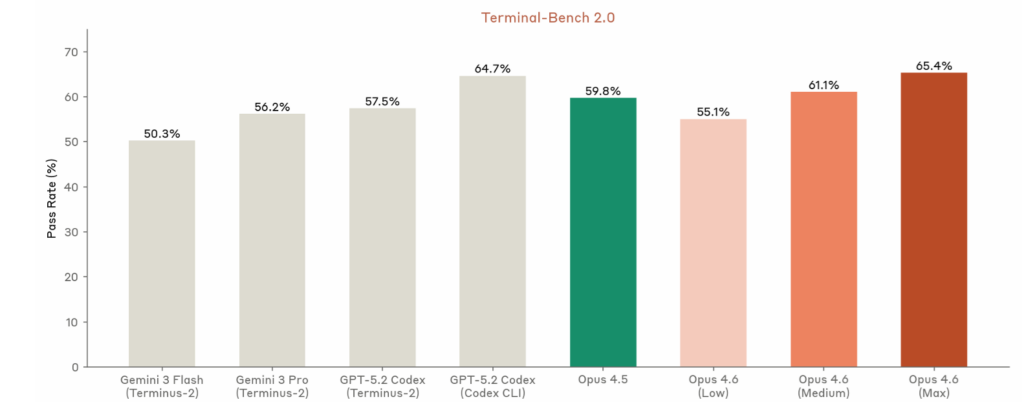
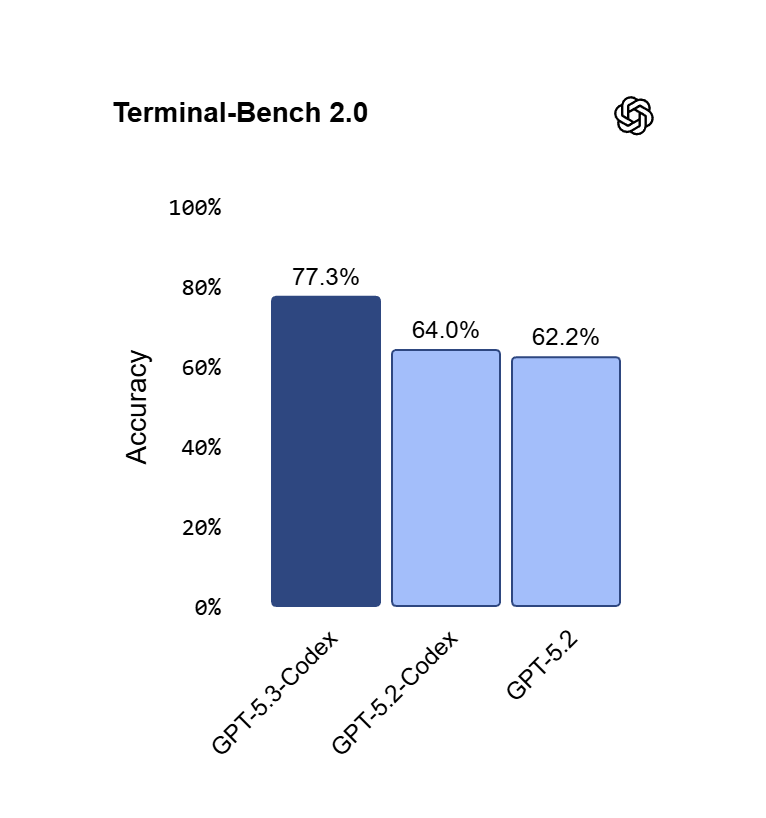
  • Terminal-Bench 2.0 (terminal/tool-use agentic coding): GPT-5.3-Codex leads at ~77.3% (state-of-the-art claim); Opus 4.6 close behind (~65–72% range in prior reports, but Anthropic claims top on agent evals); Sonnet 4.5 lower (~51%).
  • SWE-Bench Pro/Verified (real GitHub issues, multi-lang): GPT-5.3-Codex hits new highs on Pro variant (multi-lang, harder); Opus 4.6 edges on Verified for complex fixes (~80–81%); Sonnet 4.5 strong but trails slightly.
  • OSWorld / Computer Use: GPT-5.3-Codex strong (~64–65%); Opus 4.6 leads in sustained GUI/terminal chains.
  • Long-horizon Agents: Opus 4.6 excels at multi-hour autonomous runs, massive context, self-correction. GPT-5.3-Codex shines on interactive steering (like a live colleague) + tool/research chaining. Sonnet 4.5 great for volume/prototyping but needs more retries on extreme complexity.
  • Real-world vibe: Developers report GPT-5.3-Codex feels “more Claude-like” than prior OpenAI models (better git, debugging, broad tasks). Opus 4.6 often wins on deep codebase navigation + fewer hallucinations. Many use both in parallel.

Below is Anthropic’s Terminal Bench 2.0 Rating of 65.4% published by Anthropic:
Below is OpenAI’s GPT-5.3 Codex Terminal Bench 2.0 Rating of 77.3% published by OpenAI:
For serious agentic apps (autonomous tools, computer-use agents, production reliability): It’s a toss-up between Opus 4.6 (best long sustain + 1M context) and GPT-5.3-Codex (interactive steering + benchmark edges). Sonnet 4.5 is excellent but not quite frontier here.

Performance on Game Development

Game development favors creativity + systems integration + rapid iteration (mechanics, AI, procedural gen, balancing, physics sims).  All three handle Pygame prototypes, Godot/Unity pseudocode, NPC AI, etc., very well.

  • Sonnet 4.5: Best for fast prototypes/iterations — clean loops, quick balancing tweaks, simple pathfinding/behavior trees. Preferred for indie-speed work.
  • Opus 4.6: Pulls ahead on complex, interconnected systems (e.g., economy + AI opponents + physics + UI + narrative). Better at coherent large-scale design → code chains, debugging edge cases in bigger codebases, creative-yet-coherent ideas.
  • GPT-5.3-Codex: Strong contender — OpenAI highlights building “highly functional complex games and apps from scratch over days.” Excels at multi-step execution + research/tool use (e.g., pulling refs for mechanics). Feels more “productive” for iterative game workflows.

For most game prototypes/indie development: Sonnet 4.5 (speed + cost) or GPT-5.3-Codex (if you want interactive guidance).

For ambitious/systems-heavy games (e.g., simulation layers, procedural worlds, long development cycles): Opus 4.6 edges out slightly on cohesion + autonomy, but GPT-5.3-Codex is very close and often faster to iterate.

My Current Recommendation for Cloud AI Agent Assisted Development:

  • Claude Sonnet 4.5 — Default choice for 80% of agentic coding + game development: fast, cheap, reliable near-frontier.
  • Claude Opus 4.6 — Pick for the hardest agentic/long-horizon work, massive context, or when you need max reliability/cohesion (especially complex games or production agents).
  • GPT-5.3-Codex — Pick (or combine) if you value interactive steering, OpenAI ecosystem (Codex app/CLI/Copilot integration), or hit edges where OpenAI’s benchmarks shine. It’s neck-and-neck with Opus 4.6 right now — many developers test both on the same task.

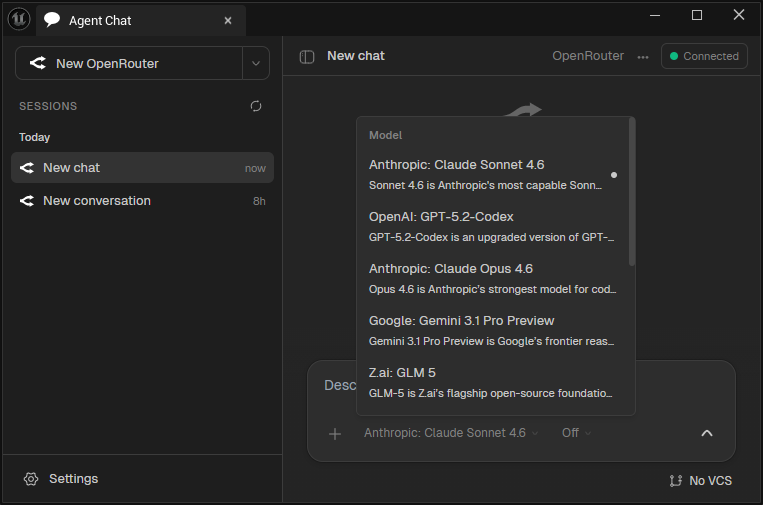
I am currently using the Claude models with my OpenRouter account as I test the  Neostack AI Plugin for Unreal Game Development.
Bottom line, the AI Assisted Video Game Development race is razor-close! Real preference often comes down to workflow (e.g., Claude Code vs. Codex app), ecosystem lock-in, and the development tools for your specific game project.   In a future post, I will go over using Claude with the Unreal Engine Game and the Betide Noestack AI Plugin.


Co-Developing Video Games using the Latest version of the NeoStack AI Unreal Game Engine Plugin Using Multiple LLMS via OpenRouter

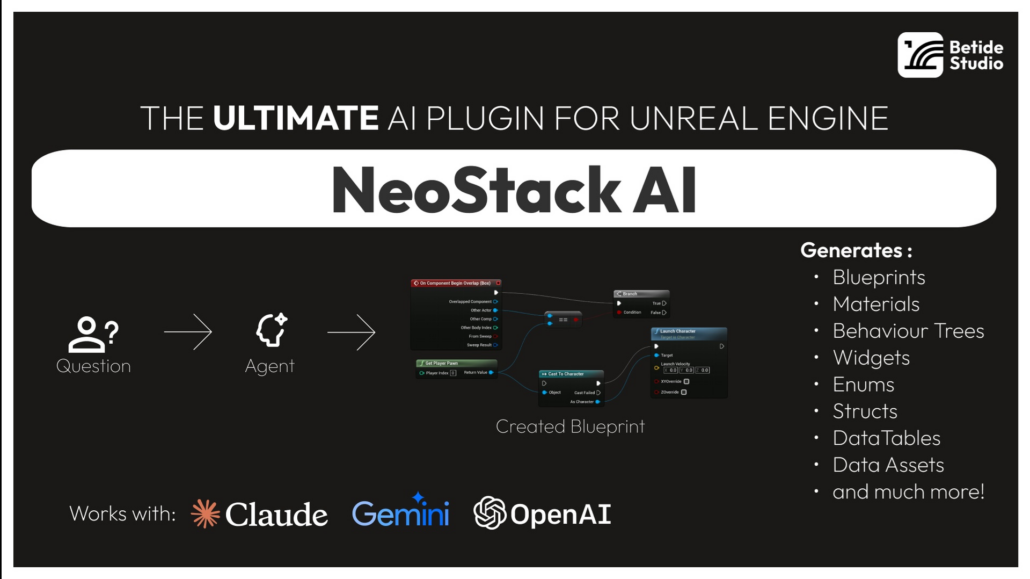
I am currently the NeoStack AI Plugin by BETIDE STUDIO.   The NeoStack AI plugin is currently in Beta and was originally released on the Epic FAB store on January 20, 2026.  I am currently testing the latest beta version (v0.3.1) which was released on 2/9/2026.

The developer is constantly releasing updates and fixes so I expect I will be constantly updating the plugin while it is in Beta.   I am looking forward to seeing how the Agent Integration plugin evolves over the next several months.

To give you a perspective of how rapidly the plugin is evolving, here is a list of updates that were released over the last couple of weeks:

The v.0.3 beta update which released the other day added the following features and fixes:

  • Composite Graphs, Comments, Macros, Local Variables, Component, Reparenting, Blueprint Interfaces are now supported! (This means agents now can do 100% of things that you can in regards of Blueprints)
  • Almost 500+ additional checks added over the plugin to reduce the number of crashes. Just want to say, if you crash, please let us know! We want to take the number of crashes to 0
  • Subconfigs added which means you can configure what tools a profile has
  • Session Resume has been fixed – No need to tell the agent what you already have
  • You can now see Usage Limits for OpenAi Codex/Claude Code in the plugin (See Image)
  • Codex Reasoning Parameter is now supported
  • Task Completion Notifications — Toasts, taskbar flash, and sound playback when the agent finishes (Configurable)
  • Montage Editing made better
  • Pin Splitting/Recombining & Dynamic Exec Pins is now supported
  • GitHub Copilot Native CLI support added
  • Fixed Packaging Issues if using Plugin
  • Class Defaults editing — ConfigureAssetTool can now set Actor CDO properties like bReplicates, NetUpdateFrequency, AutoPossessPlayer
  • Last-used agent persistence — Remembers which agent you used last instead of defaulting to Claude Code every time
  • Fixed issues with if you already are using the port for MCP

The v.0.2 beta update from the week before added the following new features and fixes:

  • Full Animation Montage editing!
  • Enhanced Input support! Create & edit Enhanced Input assets
  • Agent can now see what’s in your viewport! Captures the active viewport as an image with camera info
  • Level Sequencer has been completely rewritten
  • Agent can now set any node property directly on Behaviour Trees
  • BT reads now always show full node tree + blackboard details. Blueprint vars show replication flags. New readers for Enhanced Input & Gameplay Effects. Level Sequence reads are way more detailed now
  • New “Think” toggle for Claude Code — control how much the agent reasons
  • Streaming no longer bounces — smooth throttled updates
  • Message layout redesigned — cleaner look
  • Session saving no longer freezes UI on tab switch
  • Server now blocks browser requests by default (CSRF protection)
  • 24 Crash Fixes (It is still in Beta!)

Prior to releasing the beta plugin, Betide Studio published a standalone Windows & Mac version of the tool called NeoAI.  NeoStack AI now works across virtually every major Unreal Engine system as it is a native Unreal Engine Plugin.  It currently supports the following Unreal Engine systems:

  • Blueprints
  • Materials
  • Animation Blueprints
  • Behaviour Trees
  • State Trees
  • Structs
  • Enums
  • DataTables
  • Niagara VFX
  • Level Sequences
  • IK Rigs
  • Animation Montages
  • Enhanced Input
  • Motion Matching
  • PCG
  • MetaSounds
  • and much more planned over the next several months

NeoStack AI is currently priced at $109.99 on the FAB Store.  You can read more about all the different features here.

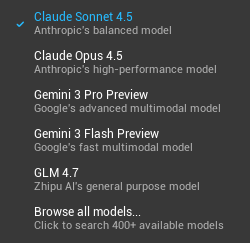
It currently works with Claude, Gemini and OpenAI CLI.  Claude Code & Gemini CLI integration requires those tools to be installed separately.  I personally prefer using my OpenRouter API Key so I can pick which AI model to use depending on the which development task I am currently doing.   Betide Studio currently recommends using Claude Code as it works best for creating Blueprint logic while the other models produce less than desired results.  The best part of NeoStack AI is that you get to choose which model to use (400+) and how much you want to pay for tokens.  You can even use the free models available on OpenRouter (e.g. GLM, DeepSeek, Qwen Coder, etc.) if you don’t want to pay for tokens and you just want to play around with it.

The Default Agent LLMs listed in the OpenRouter Dropdown menu are the following:

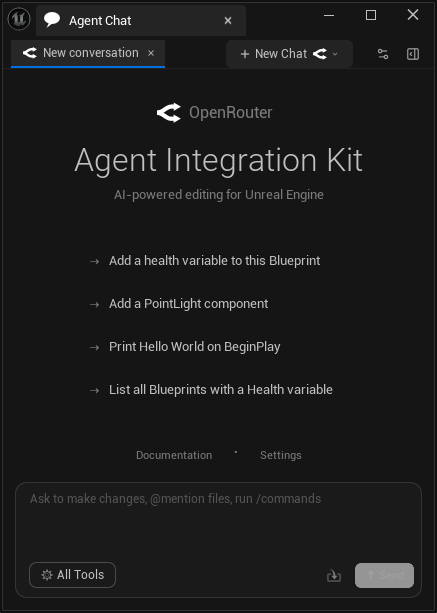
Once you install the plugin and properly configure it, you get access to this Agent Chat Window.  I configured the plugin to connect to OpenRouter with my API Key:

I’ll provide a follow up on my beta testing process after I have tested the plugin over the next several weeks.

Important BibleByte Books Visual Studio 2022 + Visual Basic & Visual C# 2022 + Unity 3D News!

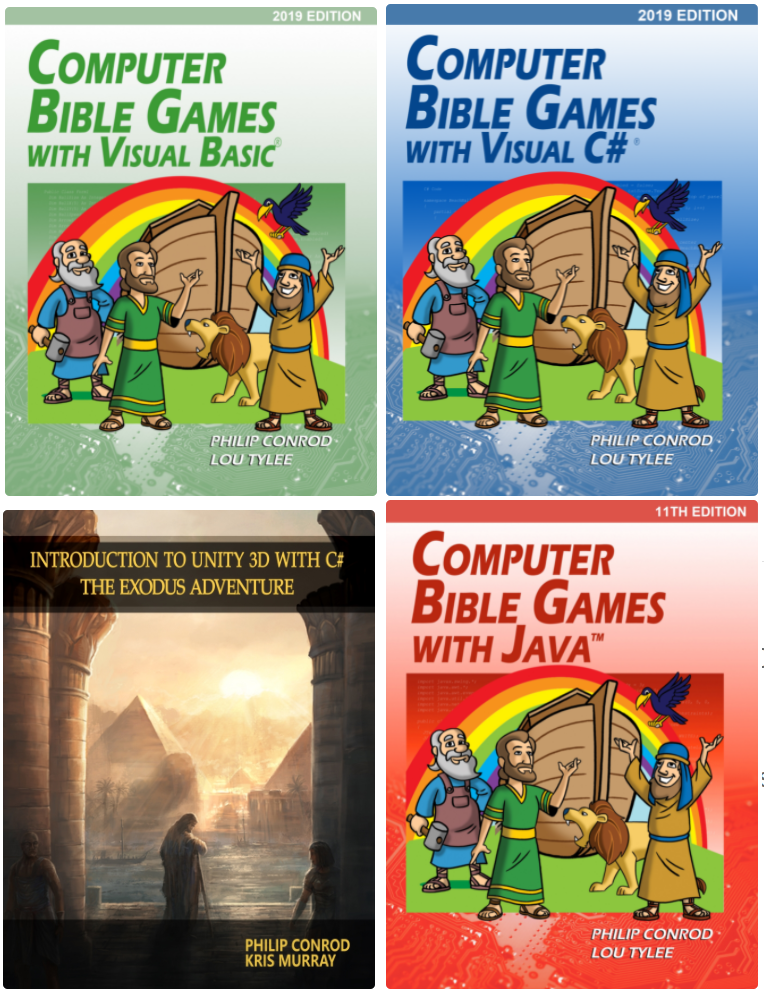
For 2022, BibleByte Books has turned all our focus efforts on publishing the Unity 2022 LTS Edition of our Introduction to Unity with C#: The Exodus Adventure.   Unity is the leading Game Engine platform for developing games using C#.   We also plan to release All Episode for our companion Exodus Vigil video game on Steam Early Access later this summer for PC & Mac.   Our Visual Studio 2019 Edition textbooks utilize .NET 4.8, which is still supported by Microsoft for the foreseeable future on Windows 10/11.  For the absolute beginner, we still sell our award-winning Computer Bible Games For Microsoft Small Basic textbook tutorial for beginning programmers of all ages!

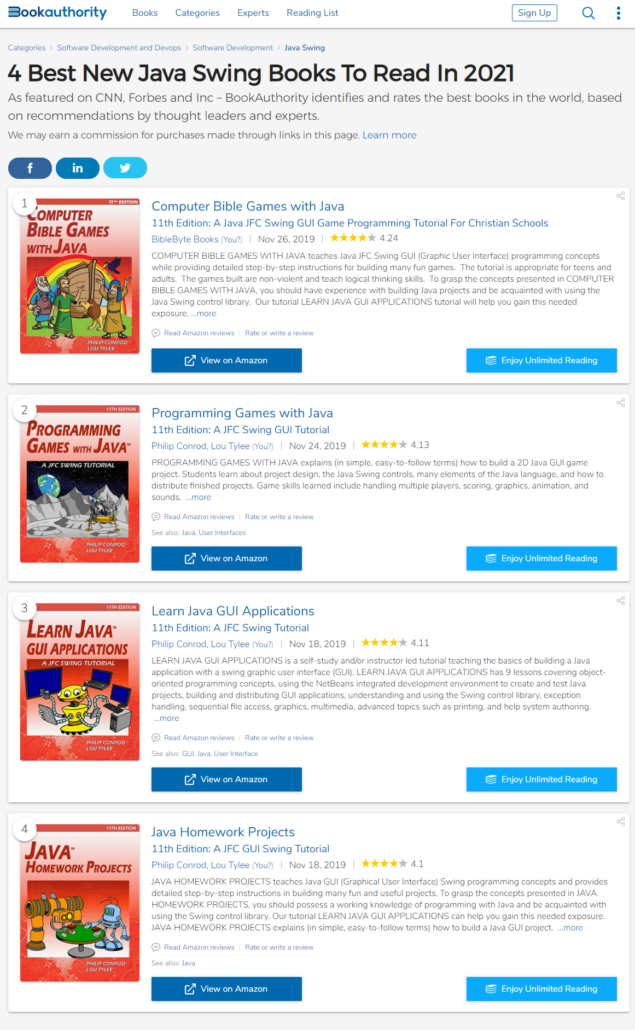
BookAuthority Selects Philip Conrod and Lou Tylee’s 11th Edition Java Swing Tutorials As the Best New Java Swing Books Again to Read in 2021!

BookAuthority Selects Philip Conrod and Lou Tylee’s 11th Edition Java Swing Tutorials As the Best New Java Swing Books Again to Read in 2021!  BookAuthority also named several of our Java Swing textbooks as the “Best Java Swing Books of All Time!“:

 

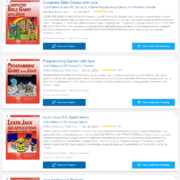
BookAuthority Selects Computer Bible Games with Java as One of the Best Java Swing Programming Books Of All Time!

BookAuthority names Computer Bible Games with Java as One of The Best Java Swing Textbooks of All Time!


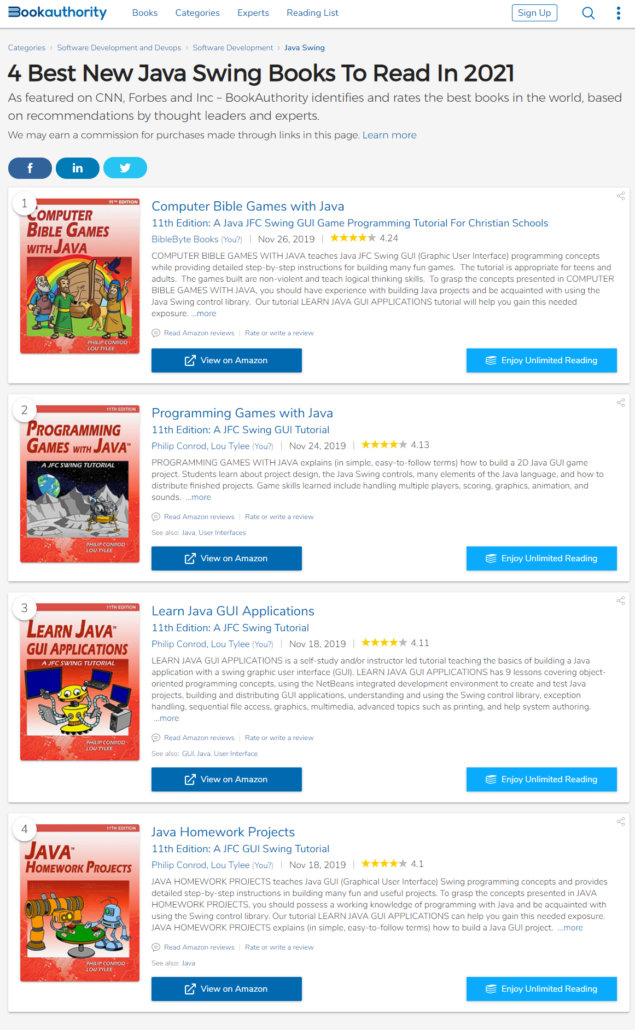
BookAuthority Also Selected our Computer Bible Games with Java as One of the 4 Best New Java Swing Books To Read In 2021!


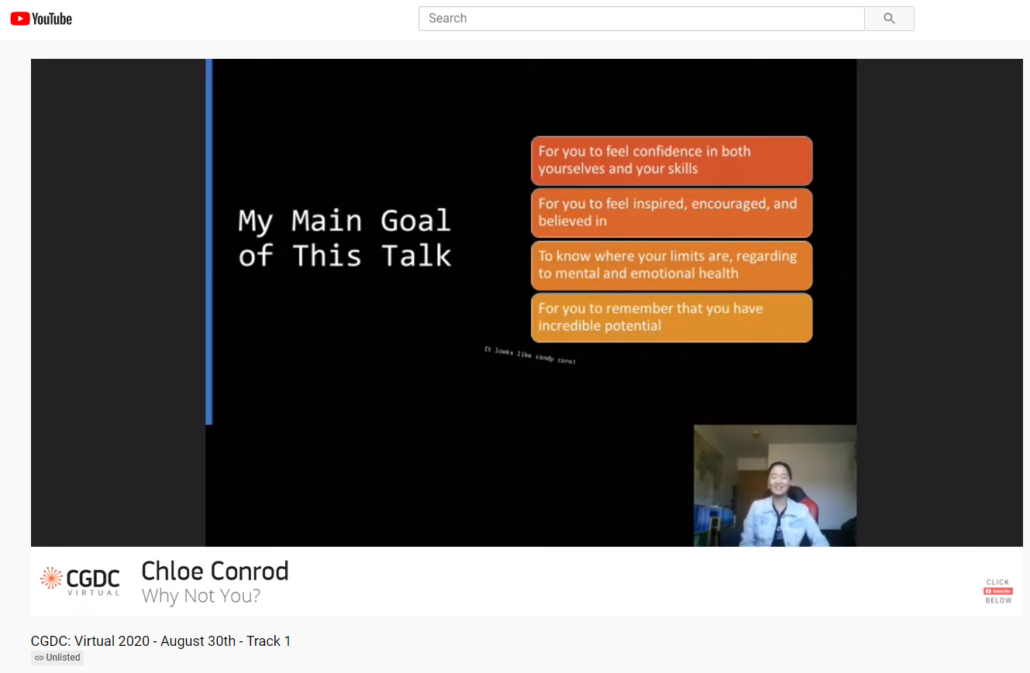
Chloe Conrod Delivers Inspirational Game Development Talk At The 2020 Christian Games Developers Conference (CGDC)

Chloe Conrod delivers an inspirational game development talk at the 2020 Christian Games Developers Conference (CGDC) on August 30, 2020! Click on the link below to view her talk on the CGDC YouTube Channel:


Summary of Chloe’s Talk:
Throughout the years, gaming has created a beautiful and mesmerizing way to escape the real world. Hundreds of these amazing creations have been released towards those of multiple generations, and have been used as an inspiration towards other aspiring game developers on what they may want to create. However, it is never a rare case for a game developer to feel burdened with the over-piling work that they have to face. From financial problems to feeling weighed down by the comments of our audience, to being exhausted from all of our hard work and wondering if we should start over, there are many in the gaming industry who have decided to quit. But, the truth is, our failures actually come from not realizing how close that we were to success, until we gave up. Us, being only human, need to realize how far that each and every one of us have come from where we originally started. Whether it’s been years of constantly working on a game, to just beginning to piece together what you want to create, or even having only attended this conference to spark and further your interest, each of us have something to be proud of. Now, this is where many of you may ask, “But, why me?” And to that, I will explain an even more important question, “Why not you?”

BookAuthority Selects Computer Bible Games with Java as One of the 3 Best New Java Swing Books To Read In 2019!

BookAuthority Selects our Computer Bible Games with Java as One of the 3 Best New Java Swing Books To Read In 2019!


BookAuthority also names Computer Bible Games with Java as One of The Best Java Swing Textbooks of All Time!